The Small Machine on the Bathroom Floor
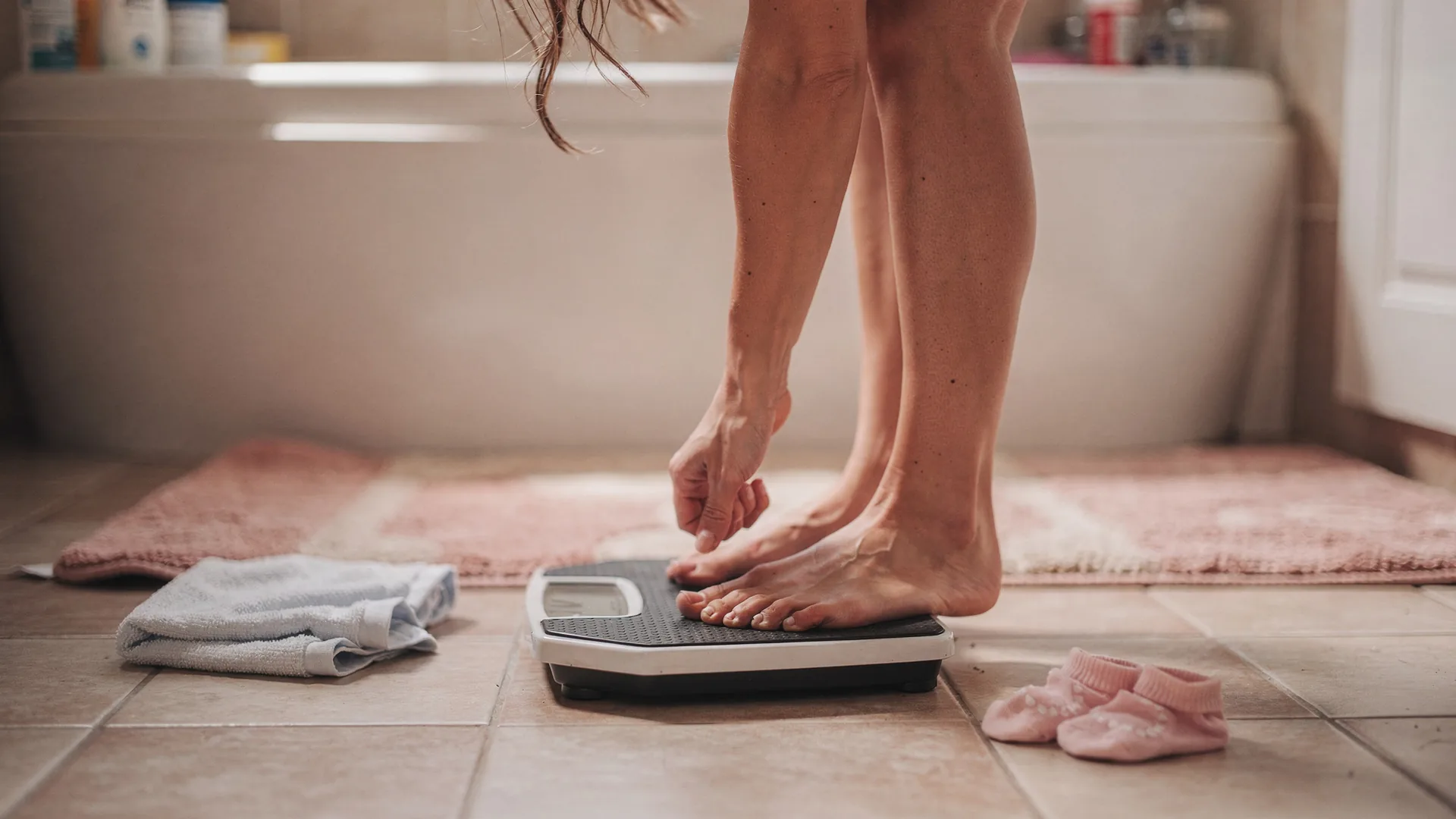
The scale sits on the bathroom floor like a tiny tribunal, and you can feel it from the hallway. Some mornings you step around it. Some mornings you step on it before you have even peed, holding your breath as if that changes the physics, waiting for a two- or three-digit number to tell you what kind of day you are permitted to have.
That is the trouble. The number was supposed to be data — a single measurement among thousands your body takes without asking. Somewhere it got promoted. Now it decides your mood, your breakfast, whether you deserve the good coffee, how you speak to yourself in the car. A number became your weather.
This is not a piece about pretending the pressure is imaginary. The pressure is extremely real, engineered by an industry that profits precisely from the size of the gap between you and a goal. But a number can be information without being a verdict, and getting it back into its lane is a skill worth having.
What the Number Cannot See
Weight is one of the least informative things you can know about a body, which is comic given how much power we hand it. It cannot see the water you are holding because you are feeding a baby, or menstruating again, or simply had salt last night. It cannot see muscle, or sleep, or the fact that you are healing from something major.
It certainly cannot see whether you are well. You can be at any number and be strong, or exhausted, or thriving, or struggling — the scale is blind to all of it. It reports one figure and lets you write the entire story, and the story you write at 6 a.m. on no sleep is rarely a generous one.
Postpartum bodies especially do not read like a straight line on a chart. They swell and settle and redistribute on a timeline nobody can predict, and treating that as a performance to be graded daily is a recipe for a war you cannot win because the terms keep changing.
There is also a cruelty in the daily weigh-in that we rarely name: it hands the worst possible referee — you, sleep-starved, at your least generous hour — a single ambiguous number and asks it to render a verdict on your whole self. No fair trial was ever run at 6 a.m. by an exhausted judge working from one line of evidence. The scale is not lying, exactly. You are just a terrible jury before coffee.
A number can be data. It should not become your weather.
Turning Down the Volume
So change what you can physically reach. If the scale is the first voice you hear each day, move it. Put it in a closet, in the garage, out with the recycling if that is what it takes. You are allowed to not have that instrument in your house, or to weigh only when a clinician actually needs the figure.
If you cannot quit it cold, ration it. Once a month, one time of day, one set of conditions, written down so a single high morning cannot masquerade as a trend. And decouple the number from the day — practice stepping off and doing exactly nothing with the figure. No breakfast changes. No mood shift. Just a number, logged and left alone.
The larger practice is refusing to let a measurement be a moral scoreboard. Feeling good in your body is not something you unlock at a target weight; it is available at the weight you are, a truth that sits right alongside the reminder that your body is not a before photo.
When Weight Is Actually a Health Question
None of this means weight never matters medically. Sometimes there is a real reason to look at it — a clinician tracking recovery, a medication that shifts it, a symptom that needs context. The difference is that a doctor asks about weight the way they ask about blood pressure: as one data point among many, in service of your health, not your worth.
If someone hands you a plan built on shrinking as fast as possible, especially while you are healing or feeding, that is the moment to get curious and ask hard questions before you sign on. There is a whole checklist for exactly that in what to ask before any postpartum weight-loss plan, and it is worth reading before the number talks you into anything.
The goal is not to never think about your body. The goal is to stop letting a small machine on the floor narrate your life. A number can be data. It should never get to be your weather — and on the days the softness underneath it feels like the real accusation, remember that softness is not failure, whatever the display insists.