The Part That Did Not Get the Memo
I want to tell you something I did not admit for months: I kept waiting for my belly to leave, and it kept staying, and I took that personally. Everyone had promised it would go — the aunts, the apps, the influencer with the timeline. Nine months on, nine months off, they said, like a receipt you could return. Nobody mentioned that some bellies simply move in and stay.
It is softer now, and lower, with a texture like the inside of an arm, and for a long time I could not look at it without hearing a countdown. As if it were a guest who had overstayed and I was too polite to say so out loud, so I just resented it quietly at the edge of every mirror.
This is not a pep talk with a before-and-after at the bottom. There is no fix-it plan hiding in the last paragraph. It is just a softer way to live with the part of you that everyone swore would vanish and simply did not.
What That Belly Actually Did
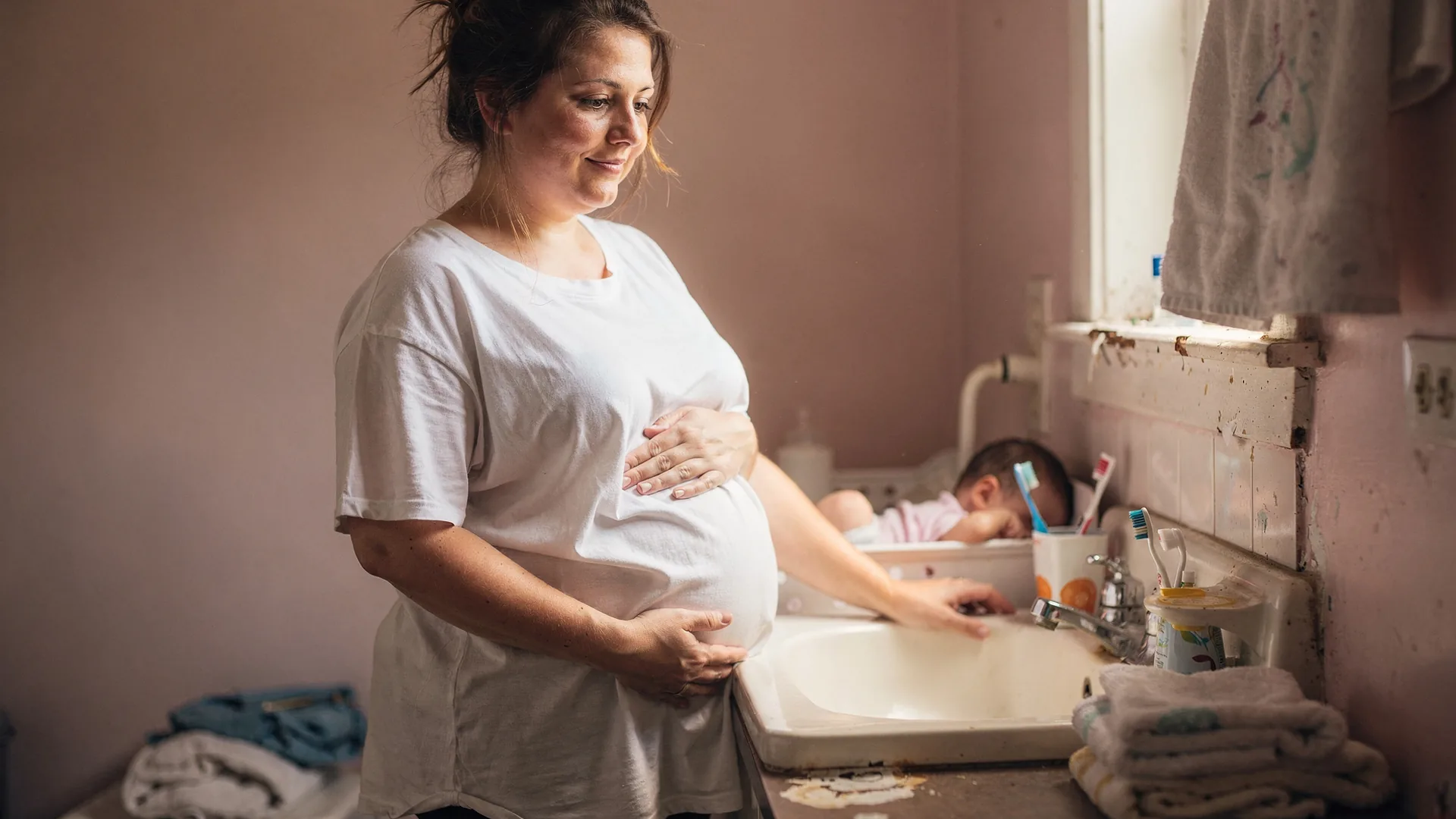
Try, for a second, to look at it as a coworker rather than an enemy. That belly stretched to a size that should not be structurally possible and held a whole person in place for the better part of a year. The skin expanded past what any material should tolerate. Muscles separated down the middle to make room, on purpose, without asking you.
Of course it looks different. It did the most physically extreme thing a human body can do and it did it with you asleep on top of it. The softness there is not evidence of failure; it is the after-image of an event so big we have run out of casual words for it.
When I started thinking of the belly as the site of the work rather than the shame of the aftermath, the countdown got quieter. Not silent. Quieter. It stopped being a thing that had gone wrong and started being a thing that had been through it — which is different, the same way softness is not failure is different from softness being a defeat.
It also stopped being useful to compare it to anyone else's. Some bellies flatten fast, some never do, and almost none of that tracks with effort or virtue — it tracks with genetics, and how many babies, and whether the muscles came back together, and plain luck. The woman in the reel whose stomach looks untouched did not earn it by wanting it harder than you.
Your belly does not need to earn tenderness by becoming flat.
Tenderness Is Not a Prize You Earn
Here is the sentence that unlocked it for me: my belly does not have to become flat in order to earn tenderness. Read that slowly. We treat kindness toward our bodies like a bonus we unlock at a certain measurement, and until then the body gets contempt as motivation. It does not work as motivation. It just makes the war longer.
So I started putting lotion on it. Small, almost stupid, deeply effective. You cannot rub cream into a part of your body every night and keep fully hating it; the hands learn something the head is slow to admit. Touch it like it belongs to someone you are supposed to take care of, because it does.
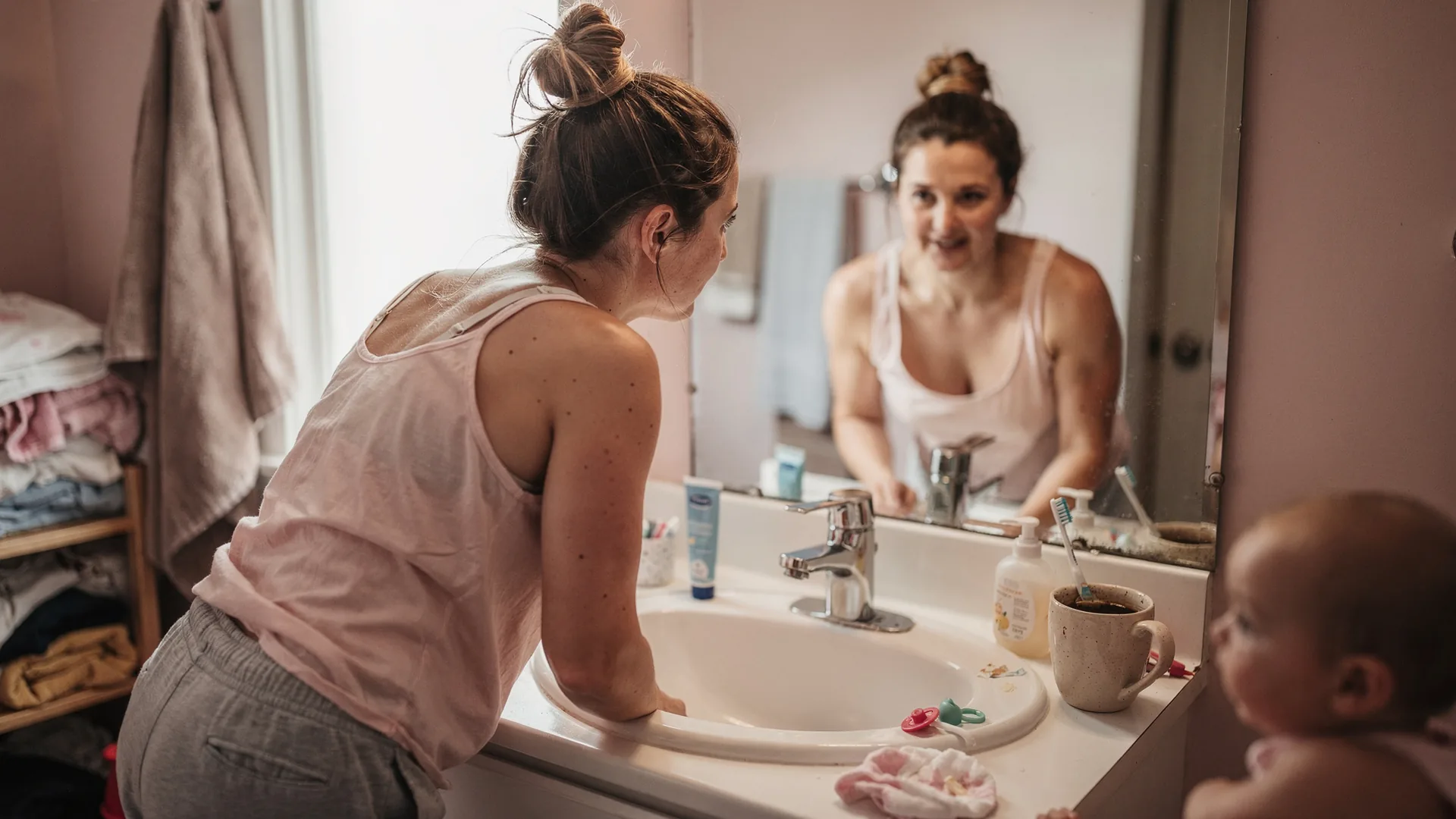
The mirror will still try to weigh in, especially the harsh one over the sink at dawn. It is worth remembering that the bathroom mirror is not the boss of you — it is glass in bad light, offering an opinion it has no standing to give.
Living in the Present-Tense Body
Peace, it turned out, was not a feeling I arrived at once and kept. It was a decision I made most mornings and forgot by some afternoons and made again. Some days I catch my reflection sideways and the old resentment flickers up out of habit. I let it flicker. I do not have to obey it.
The belly that stayed is not a placeholder for a smaller one still in the mail. It is the belly of a woman whose life is fully underway — the one who is in the room, in the photos, in the moment, not the one waiting for a body that would finally be allowed to count. That is the whole argument behind remembering that your body is not a before photo.
It stayed. I stopped asking it to leave. Most days now it is just my belly — soft, low, mine — and the countdown has run out of numbers. That is as close to peace as I needed to get.