The Doorway Standoff
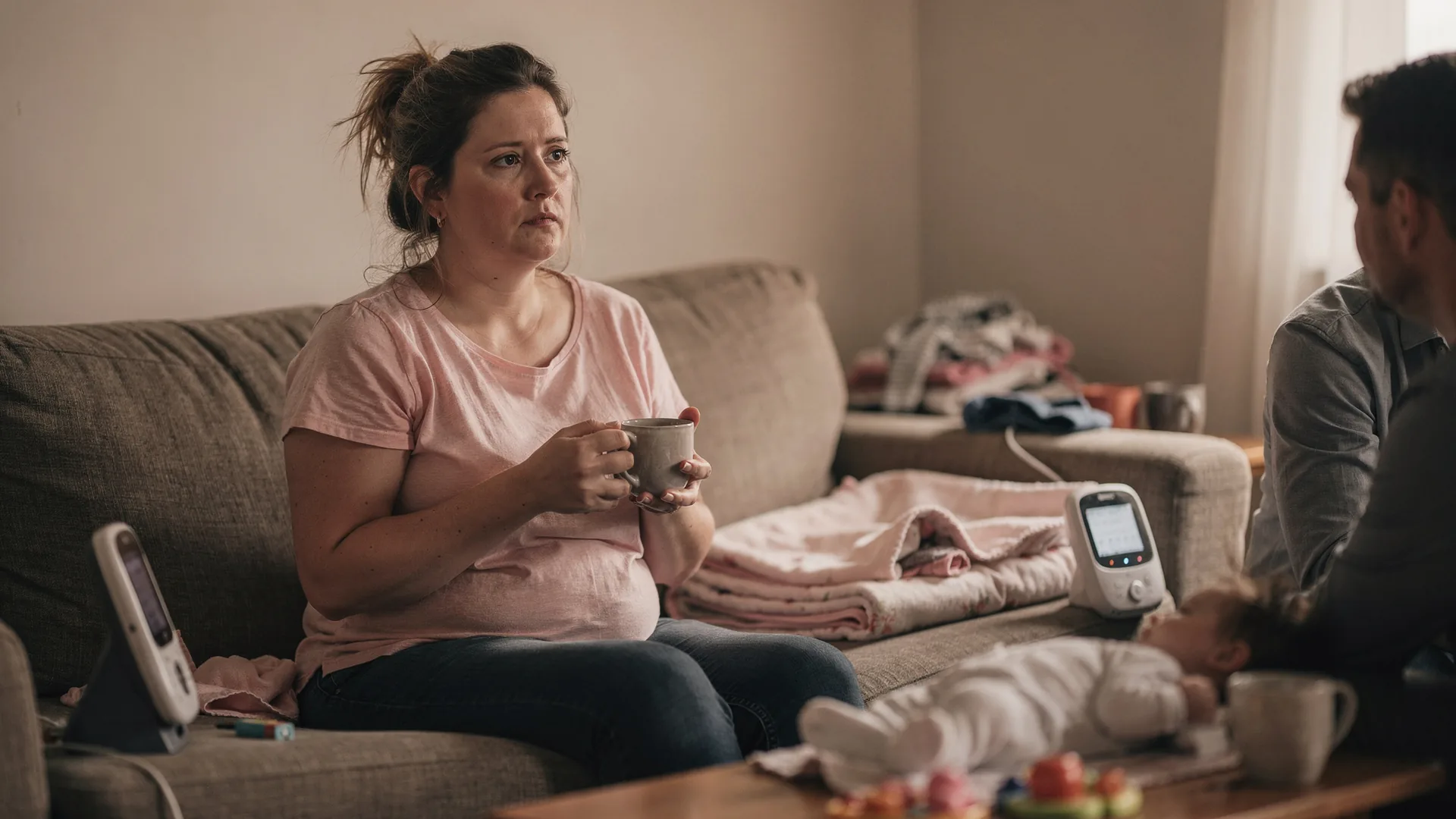
It's nine at night and your partner reaches for your hand and you flinch and then immediately feel terrible about flinching, because in the same breath you also wanted, badly, to be held — just not like that, not right then, not after a whole day of small hands and a mouth that needed you. You stand in the doorway between wanting to be left completely alone and wanting to be wrapped up and told you're still a person, and you cannot find a single word that holds both.
So you say nothing, or you say "I'm just tired," which is true and also a fraction of the truth. The fuller truth is that two opposite things are running at once inside you, and neither is a lie. You want space. You want touch. The contradiction isn't a malfunction to be fixed before you're allowed to have needs. It's just what intimacy looks like in a body that's been in constant demand since dawn.
Nobody hands you a script for this. The old scripts assumed desire was a simple switch — on or off, yes or no — when yours has become a whole weather system with fronts moving in different directions. Learning to speak from inside the contradiction, instead of waiting to resolve it first, is most of the work. You don't owe anyone a tidy answer.
Touched Out Is Not the Same as Shut Down
By evening your skin can feel like it has been used up — nursed on, climbed on, leaned against, grabbed — and the idea of one more hand on you makes something in you recoil. That's real, and it's physiological, not a referendum on your relationship. Being touched out and still wanting to be loved at the same time is one of the most common contradictions of this whole era, and almost nobody warns you it's coming.
The trap is reading the recoil as the end of desire, or worse, as evidence that something's broken between you. It usually isn't. It's a body that has hit its sensory ceiling for the day and needs the specific kind of touch that gives instead of takes. The flinch is about capacity, not love. Those are different measurements, and confusing them is how good couples end up hurt over a misread.
It helps, weirdly, to separate touch from what it's for. A hand on the back that's asking for nothing lands differently than a hand that's the opening line of something else. When you're touched out, the un-asking touch can be the thing that brings you back to yourself — but only if you can say which one you actually want, out loud, without the flinch getting mistaken for a verdict.
Your yes matters more when your no is safe.
Why Your No Has to Be Real First
Here's the mechanism nobody explains: you cannot fully want something you're not allowed to decline. If yes is the only acceptable answer, then every yes is a little bit coerced, even a self-coercion, and your body knows the difference even when your mouth doesn't. Desire needs an exit to feel like desire. A yes only means something when no was genuinely on the table.
So the unsexy foundation of wanting each other again is a no that's actually safe — one that doesn't trigger sulking, a cold shoulder, or a three-day thaw. When declining touch tonight doesn't cost you the peace of the house, saying yes tomorrow stops being a performance and starts being a real choice. Your yes matters more precisely when your no is honored.
This is worth saying to your partner directly, in daylight, not negotiated in the charged dark of the doorway. "When I can say no without it becoming a thing, I actually want you more." It sounds counterintuitive. It's the opposite. A protected no is the most romantic infrastructure you can build right now.
Awkward Is Allowed, and Kind of the Point
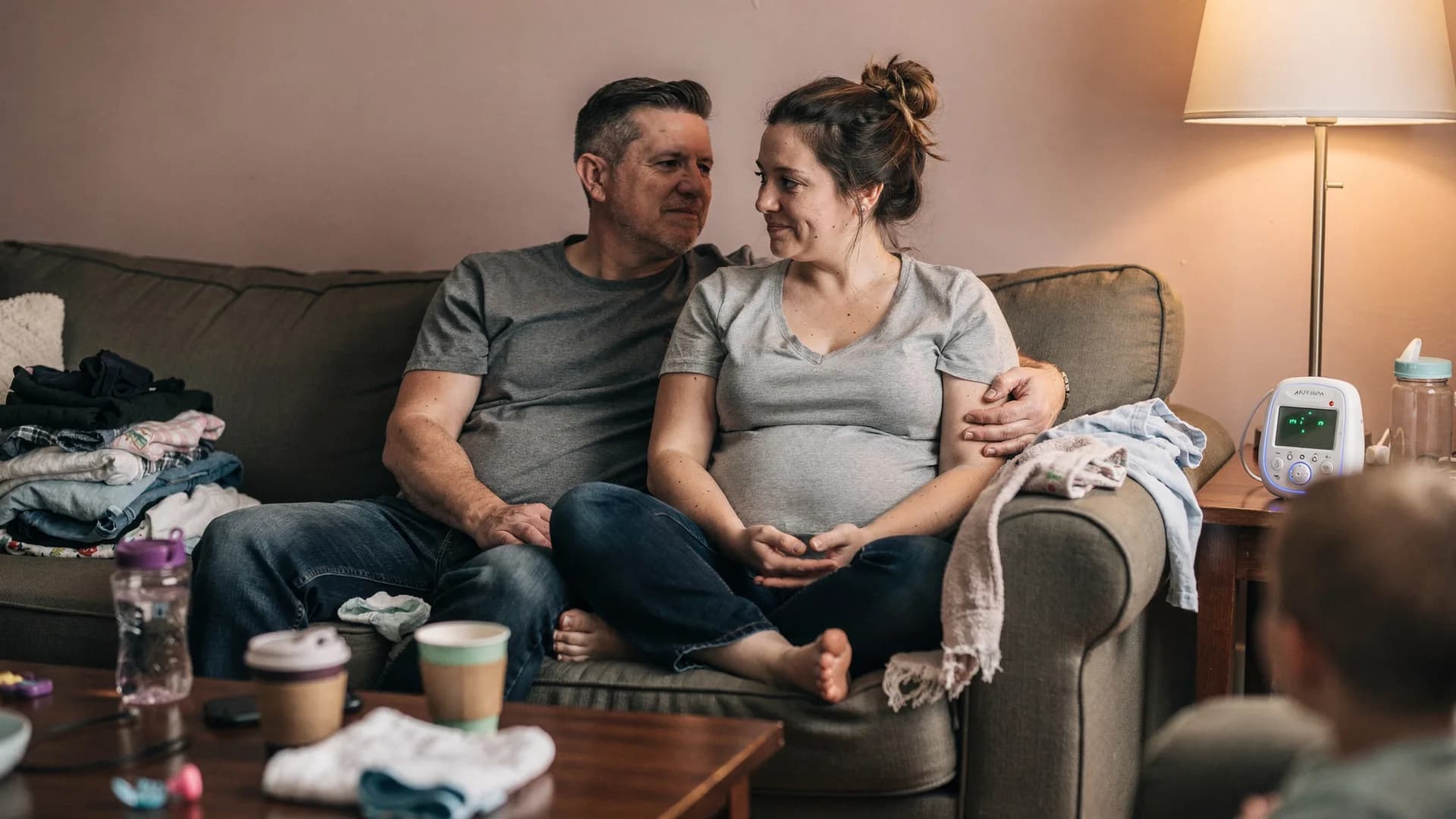
Postpartum intimacy is going to be clumsy for a while, and the couples who make it through are not the ones who reclaim some seamless old choreography. They're the ones who let it be funny. Who narrate the weirdness out loud — the leaking, the exhaustion, the baby monitor lighting up at the worst possible second — instead of performing a smoothness neither of you feels. Awkwardness survived together is its own kind of closeness.
The pressure to "get back to normal" is a trap, because normal is gone and a new thing is still assembling itself. It moves slowly. It stops and starts. Some nights it's a whole conversation and a laugh and nothing more, and that counts. Speed is not the metric. Honesty is.
You don't have to feel one clean thing to be close to someone. You can want space and want touch, be touched out and want to be loved, laugh and cry in the same ten minutes. If the desire itself has gone quiet lately, that's its own real thing and not a failing — low desire is not a brokenness, and it deserves the same honesty as everything else. What holds it all together isn't resolving the contradiction. It's being brave enough to say it out loud.
Saying the Whole Sentence
The move, when you find it, is to stop editing yourself down to one feeling. "I want to be close to you and I can't be touched right now" is a complete, honest sentence, and it's kinder to both of you than the half-truth of "I'm tired." It tells your partner where the door actually is instead of leaving them to guess and guess wrong.
Give them the specific version, too, because "I want space" and "I want to be held while I fall asleep and that's all" lead to completely different nights. Specifics aren't unromantic. They're how two exhausted people find each other in the dark without a map. The clearer you are about what you want, the more likely you are to actually get it.
Both things are true. You are allowed to want to disappear into a locked bathroom for twenty minutes and to want your partner's arms an hour later. That's not indecision or mixed signals. It's a whole person, still here under all the demand, learning to ask for what she needs one honest, contradictory sentence at a time.