The Sticky Note on the Nightstand
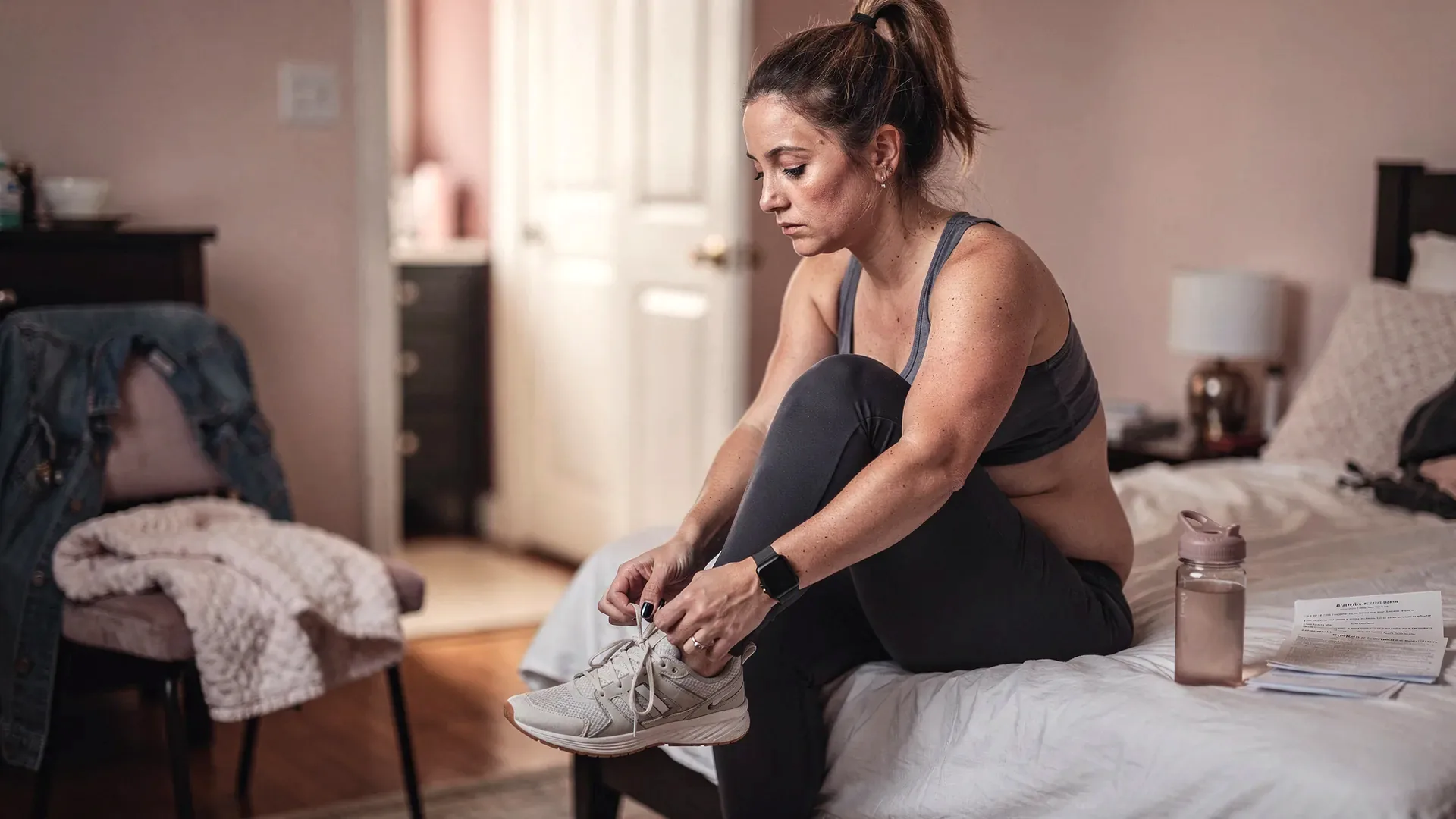
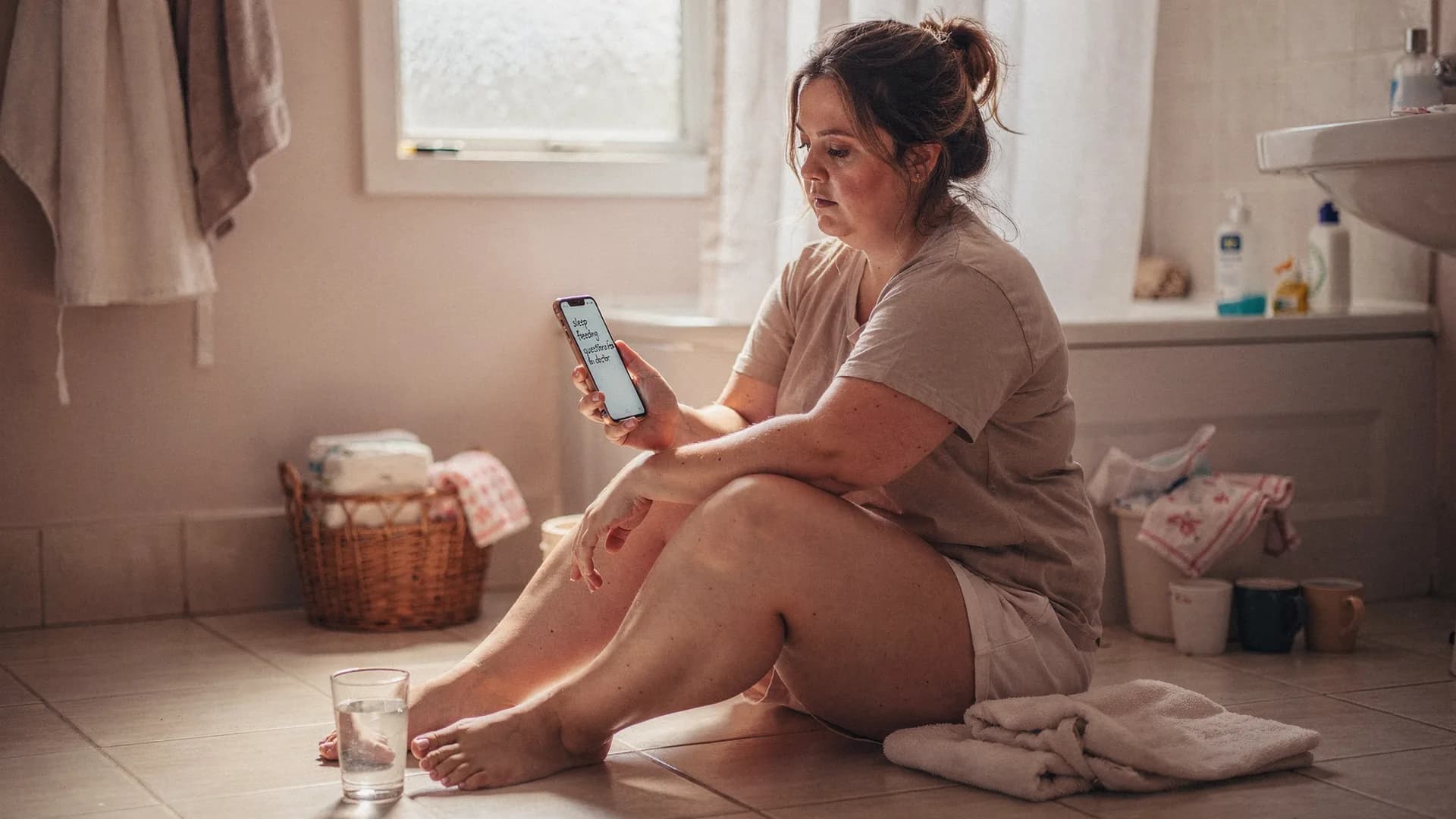
Somewhere near your bed there is probably a scrap of paper, or a note on your phone, where you have written the things you keep meaning to mention and keep forgetting the second a real person asks how you are. A number of pads. A color you weren't expecting. A cramp that arrives at a specific hour like it has an appointment. You wrote it all down because the details feel too small to say out loud and too big to ignore, and somewhere in between they turned into a low, permanent hum of worry.
No article can tell you what your bleeding means, and the ones that promise to are guessing at your body from across the internet. What this one can do is help you carry those scraps into the room and say them plainly, so the person trained to interpret them actually gets to. The details on that sticky note are not trivia. They are data. You are not being dramatic by tracking them.
The pull toward silence is strong, especially when the baby is finally down and calling feels like one more errand. But specifics are how a clinician tells the ordinary from the not-ordinary, and you are the only one holding them. Bringing them is the opposite of overreacting. It's showing up with the information nobody else can give.
Bleeding Has a Vocabulary, and You're Allowed to Use It
Postpartum bleeding changes over days and weeks, and "a lot" or "not much" tells a clinician almost nothing on its own. What helps is texture. How many pads you soak in an hour, not just today. Whether the color went from bright to brown and then, notably, back to bright. Whether a clot was the size of a coin or something that made you stop and stare. You don't need the right medical word. You need the honest, specific one.
It also helps to track what your body was doing around the change. Did the heavier flow show up after you overdid a walk, or lifted the car seat wrong? That context is not you confessing to a crime. It's a pattern, and patterns are exactly what a trained person is listening for.
If something about the bleeding scares you — a sudden gush, soaking through in an hour, feeling faint or breathless — that's not a note-it-for-later item, that's a call-now item, and there is no version of that call that wastes anyone's time. Knowing where that line sits for your own recovery is worth asking about directly, and it pairs closely with learning when to reach out without rehearsing an apology first.
Specific details help clinicians help you. You are not wasting anyone's time.
Pain That Deserves a Full Sentence
"It hurts" is where most of us stop, because when you're this depleted, finishing the sentence takes energy you don't have. But pain is one of the most useful things you can describe well, and the description barely takes longer than the flinch. Where is it — the incision, deep inside, one specific side, everywhere. What kind — burning, pulling, stabbing, a dull ache that never fully leaves. When — with movement, at rest, feeding, peeing, or the moment you shift your weight to stand.
Add the trend. Pain that is slowly fading, even unevenly, tells a different story than pain that was improving and then turned a corner and got worse. A new fever alongside pain is its own sentence entirely. So is redness, heat, or a warm swollen spot that wasn't there yesterday. You are not required to know which of these matters most. You're allowed to report all of it and let someone else sort the weight.
Some pain gets quietly filed under "this is just how it is now," especially the pelvic kind — the pressure, the sense that something isn't holding, pain during sex weeks later. It's worth naming out loud rather than absorbing, because your pelvic floor deserves more than a shrug and a lot of it is more addressable than the internet lets on.
How to Say It So You Actually Get Heard
Lead with the thing you're most worried about, not the polite warm-up. Appointments run short and the first ninety seconds carry the most weight, so "I'm bleeding heavier than last week and I want to make sure it's normal" belongs before the small talk, not after it. If you tend to shrink your own symptoms in the moment — most of us do — hand over the note instead of trusting yourself to remember. Reading off the paper counts.
Ask for the plan in plain terms before you leave. What should improve, and by when. What specifically should make you call before the next visit. What's the actual number to use after hours, and who answers it. Writing the answers down where you already keep the sticky note turns a vague "keep an eye on it" into something you can measure at 3 a.m. instead of spiraling over.
And if the answer you get is a wave of the hand when your gut says otherwise, you're allowed to ask again, or ask differently, or say the words "I need you to take this seriously." The six-week clearance is not a finish line, and neither is a single reassuring glance. Persistence isn't rudeness. It's advocacy, and it's yours to use.
You Are Not the Boy Who Cried Wolf
There's a fear underneath all of this that if you call and it turns out to be nothing, you'll have spent a credit you can't get back — that they'll roll their eyes, that next time you'll be the anxious one. Let that go. Clinicians would vastly rather hear about ten things that resolve on their own than miss the one that didn't. That math is on their side of the desk, not yours to manage.
The women who get good care are, over and over, the ones who described their symptoms specifically and refused to translate their own worry into an apology. That's not luck. It's a skill, and you can build it one honest sentence at a time. The sticky note is where it starts.
So keep the list. Add to it without judgment. Bring it in, read it out, ask what comes next, and write down what they say. Your body just did an enormous thing and it's still doing the quieter, harder work of healing. Paying close attention to it, and insisting someone qualified pay attention too, is not vanity or panic. It's the most basic kind of care, and you are allowed to expect it.